
Cottages of Fairhope – Everything You Need to Know
What Makes a Cottage a Cottage
A cottage is defined by value, not decoration: modest scale, honest materials, and a relationship with the outdoors that larger homes tend to lose. If you want to get to know cottages of Fairhope, it is best to visit and experience one; many are available as vacation rentals in Fairhope Alabama. This article is meant to be the next best thing, giving you a comprehensive understanding of the history and features of Fairhope cottage tradition.
The word traces to medieval England, where a “cotter” was a tenant farmer and the cottage was the home that came with the work — one main room, a loft for sleeping, thick walls built from whatever the land provided. Every detail served a purpose. Small windows held warmth. Low ceilings kept the fire’s heat close. Thatched roofs shed rain. Nothing was ornamental because nothing could afford to be.
That principle survived the crossing to America. New England settlers adapted the English cottage in Cape Cod — steep roofs, cedar shingles, a central chimney warming every room. The South took the same idea and turned it inside out. Where Northern cottages were built to retain heat, Southern cottages were built to release it: high ceilings, wide porches, open floor plans designed to move air through every room.
The cottage is often confused with the bungalow or the Craftsman home, but the distinctions matter. “Cottage” and “bungalow” describe the form of a house — its size, shape, and proportions. “Craftsman” describes a style — the intricate woodwork, built-in furniture, and stained natural finishes that emerged from the Arts and Crafts movement in the early 1900s. A cottage can be Craftsman in style, but at its core, the cottage is simpler. Its woodwork is typically painted rather than stained. Its details are less expensive, more functional, and more forgiving. A Craftsman home showcases the hand of the builder. A cottage lets the materials speak for themselves.
What all cottages share — regardless of region, era, or style — is material honesty. Real wood with visible grain. Pine ceilings where you can count the knots. Stone or brick that came from nearby. Nothing is faked, veneered, or mass-produced. You can touch it and feel the cottage.
The Gulf Coast Cottage Tradition
The Gulf Coast cottage is one of America’s most distinctive regional forms, and every element of its design is a response to the same set of challenges: heat, humidity, hurricanes, and salt air.
The foundational form is the Creole cottage, which dominated construction along the central Gulf Coast from roughly 1790 to 1840. These were not imported designs. They emerged from the layering of French, Spanish, Caribbean, and West African building traditions — each culture contributing something practical to a form that had to survive in subtropical conditions. The result was a home raised on brick piers to manage flooding and encourage airflow beneath the floor, topped with a steep gable roof extending over a full-length front porch, and oriented to catch prevailing breezes through an open floor plan with no central hallway.
The Montrose Historic District, located between Daphne and Fairhope on Alabama’s Eastern Shore, preserves some of the finest surviving examples. The Chapman-Scott House and McIntyre-Kennedy House, both built in 1855, feature the classic five-bay Creole facade with recessed porches and square columns. Many of these homes were built as summer retreats for families from Mobile — establishing a vacation cottage tradition on the Eastern Shore that predates Fairhope’s founding by four decades.
The design vocabulary that evolved here — elevated foundations, metal roofs, wide porches, louvered shutters, shiplap siding, high ceilings, and cross-ventilation — appears across the entire Gulf Coast corridor from Brownsville, Texas, to Key West, Florida. The cultures vary. The climate-driven solutions converge.
Two features set the Gulf Coast cottage apart from every other American cottage tradition.
The first is the porch. In a Northern cottage, the hearth is the center of domestic life — the family gathers around the fireplace. On the Gulf Coast, the porch replaces the hearth. A deep gallery — eight feet at minimum, often wrapping the full perimeter — functions as an outdoor room. It creates shade, moves air, and serves as the social center of the home.
The second is the screened porch — a distinctly Southern innovation born of pure necessity. Without screens, mosquitoes and gnats make outdoor living unbearable from April through October. Screens transformed porches into sleeping porches, cooking porches, and all-season living rooms. The tradition of painting porch ceilings haint blue — a pale robin’s-egg shade that traces back approximately 200 years to the Gullah Geechee people of the Lowcountry — spread across the entire Gulf South. The original paint was made from indigo mixed with lime, which happened to repel insects. The color remains a hallmark of Southern cottage porches today.
Fairhope Has a Cottage Culture
Fairhope’s cottage tradition is not accidental. It is philosophical.
On November 15, 1894, a group of 28 followers of economist Henry George left Des Moines, Iowa, and purchased clear-cut land on the bluffs of Mobile Bay for $5.50 per acre. They named their settlement “Fairhope” because they believed they had a fair hope of success where over a hundred similar utopian colonies had already failed.
Their experiment was based on George’s single-tax philosophy: tax the land, not what is built on it. Residents lease land through 99-year renewable agreements rather than owning it outright. Whether someone builds a cottage or a mansion, the land-based assessment remains the same. The system was designed to prevent land speculation and promote community benefit over private wealth. The founders deeded all parkland, the wharf — now the Fairhope Municipal Pier — and the original streets to the city.
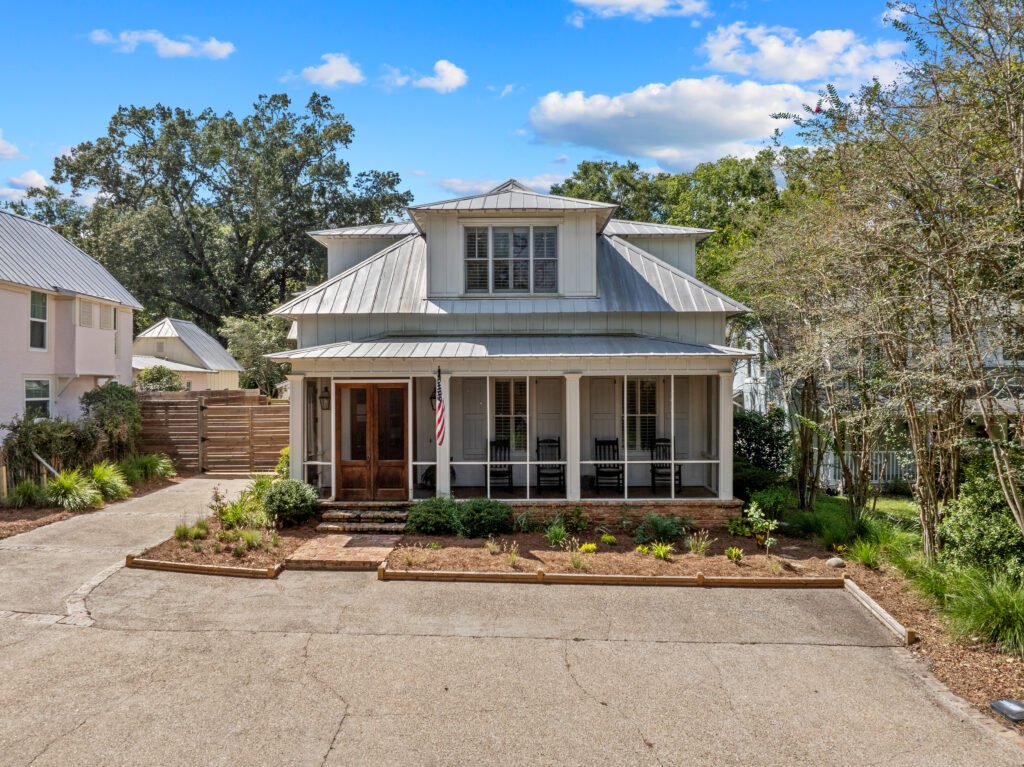
The Fruit and Nut District — with streets named after fig, pecan, and orange trees, this iconic district — contains classic summer cottages dating to the late 1800s, many over a century old. The neighborhood sits within walking distance of the pier, the marina, downtown shops, and restaurants. Welcoming porches and intimate courtyards characterize homes that range from 800 to 1,200 square feet — proof that a home does not need to be large to be complete.
What Defines a Fairhope Cottage Today
Walk into a Fairhope cottage and you will notice the materials before anything else.
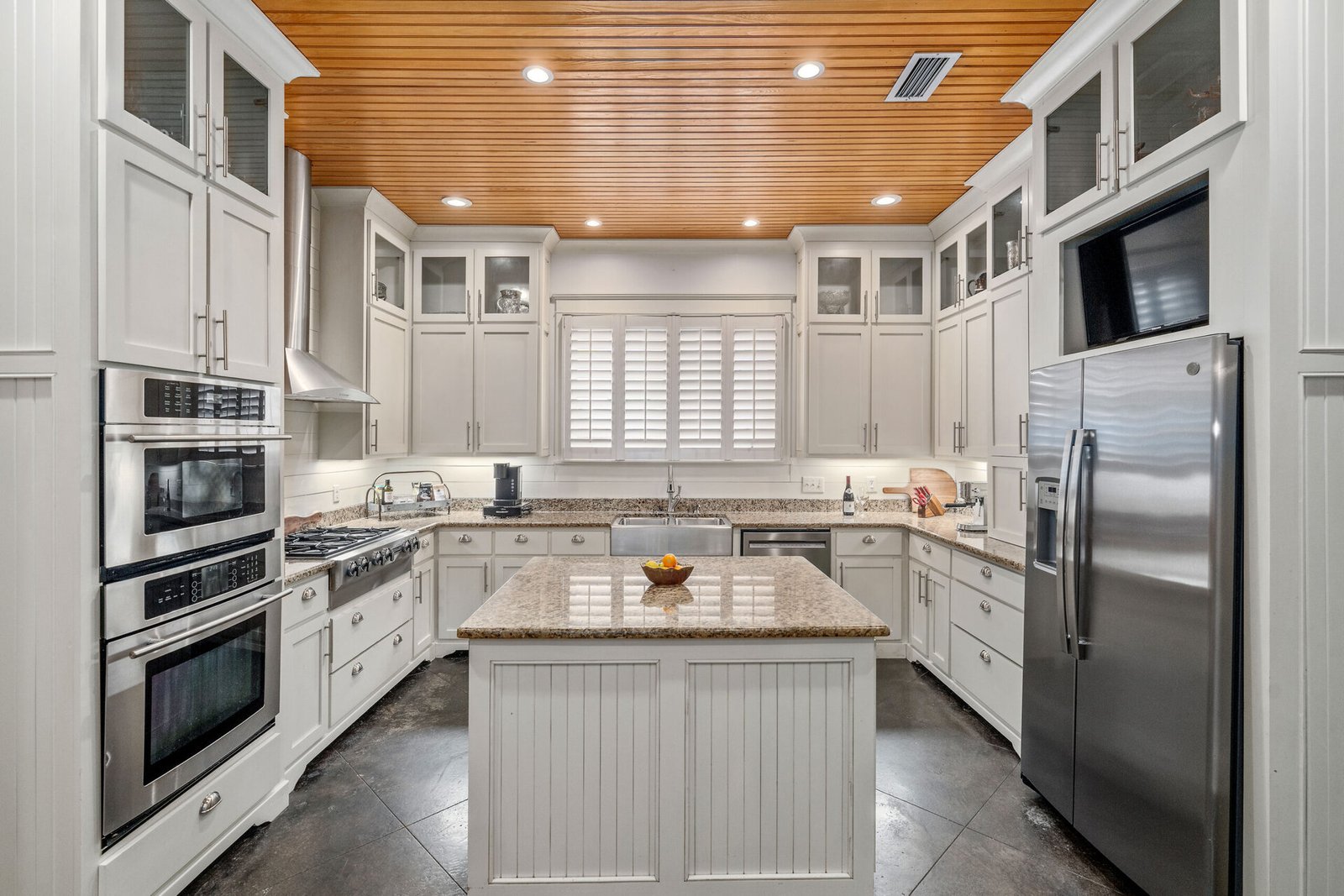
Shiplap walls have been a structural element in coastal cottages for centuries. Pine tongue-and-groove ceilings create a warm, seamless surface overhead that no drywall can replicate. These are not trends. They are traditional Fairhope cottage finishes that work — structurally, aesthetically, and emotionally.
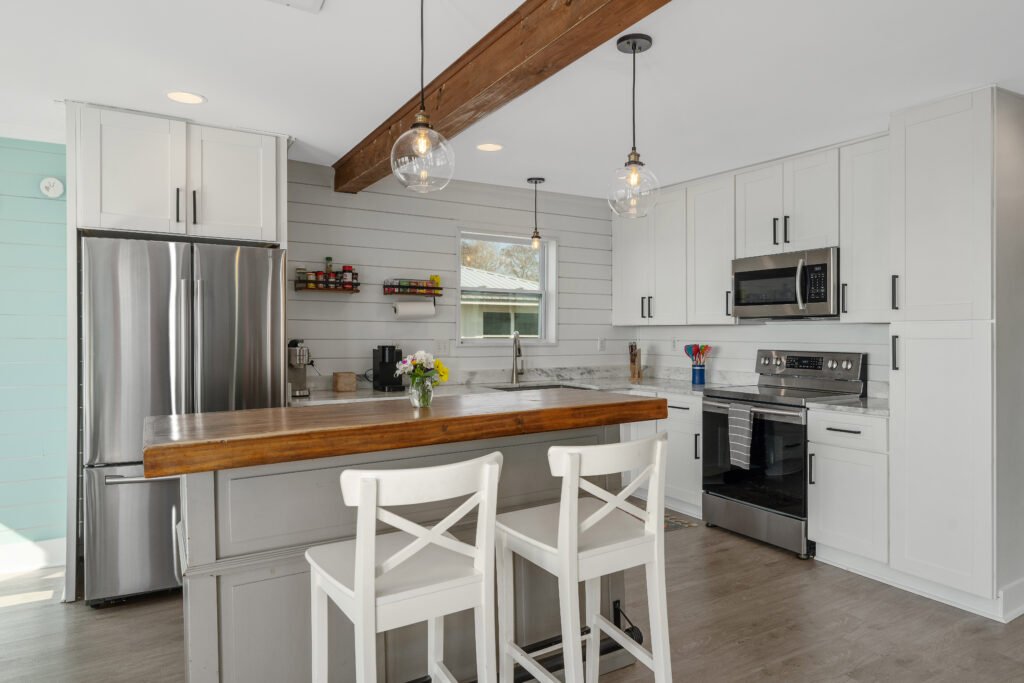
Natural wood doors run through the best Fairhope cottages unpainted, left to speak for themselves. It is a small detail that sets a tone. Board-and-batten walls — wide boards separated by narrow strips — add architectural depth and texture. Cypress, cedar, and heart pine are the traditional building woods of the Gulf Coast, chosen for their natural resistance to moisture, insects, and rot. These materials age gracefully where synthetics fail.
The interior philosophy of a Fairhope cottage is what designers call “collected rather than staged.” Furnishings from different eras and different styles, gathered over time rather than purchased as matched sets. A vintage dresser beside a painted nightstand. Linen bedding that wrinkles beautifully. Ceramic pieces with natural imperfections. The goal is a space that feels lived in, not staged.
Cottage Colors from Key West Alive in Fairhope
Down the Gulf Coast corridor, in the southernmost city in the continental United States, another branch of the cottage family took root. Key West’s conch houses — built by Bahamian immigrants who applied shipbuilding techniques to residential construction — share the same climate-driven DNA as every Gulf Coast cottage: raised foundations, metal roofs, wide porches, louvered shutters, and wood-frame construction designed to breathe.
What makes Key West visually distinct is the color.
Most Key West buildings were originally white or unpainted. The vivid pastels that tourists associate with the island today evolved over time, driven by several converging forces. The Afro-Caribbean heritage of Bahama Village brought bright color palettes from island building traditions. The tropical light — more intense than anywhere else on the Gulf Coast — made bold colors that would seem garish in northern climates appear natural and inviting. And Key West, which has always attracted nonconformists, embraced color as an expression of the individualistic, bohemian culture that has defined the island since Hemingway’s day.
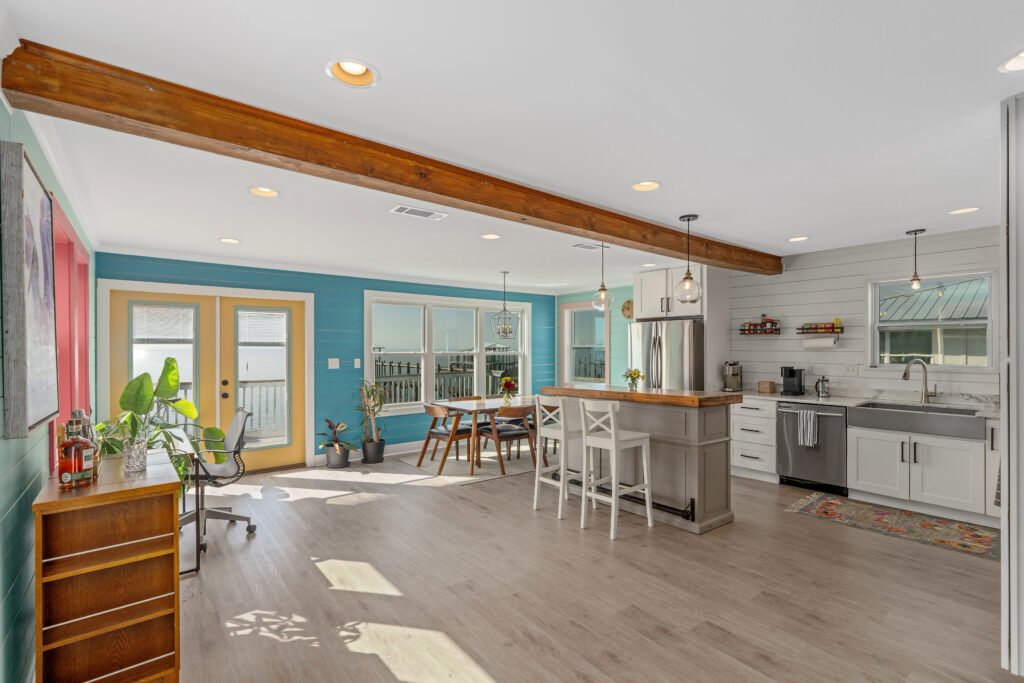
The signature palette — seafoam green, coral pink, sky blue, sunny yellow, mint green — mirrors the natural environment. Bougainvillea pinks, key lime greens, ocean blues, and sunset oranges. The Key West Historic Architectural Review Commission now oversees the tradition, with guidelines favoring pastels, light hues, and the traditional white trim that ties the palette together.
Alabama’s cottage tradition has historically been more restrained — light colors, natural wood, earthy tones that blend with the live oaks and bay views. But the bold Key West branch of the Gulf Coast cottage tradition has roots along the entire corridor. The same Caribbean and Bahamian influences that colored Key West traveled through New Orleans and Mobile. A Fairhope cottage painted in Sherwin Williams’ Jamaica Bay, Pink Flamingo, or Jazz Age Coral is not borrowing from Key West — it is drawing from the same well.
The connection between Key West and Fairhope runs deeper than architecture. Both are small Gulf Coast communities — roughly the same population — where creative culture took root early and became a defining characteristic. Key West’s artist colony emerged in the 1930s when the federal government, visiting the bankrupt island during the Depression, observed it would make the perfect home for writers and artists. Hemingway, Tennessee Williams, and Robert Frost made it famous. Fairhope’s creative identity is older, more deliberate, and grounded in a different kind of idealism — but the result is similar: a walkable town where art, nature, and an independent spirit shape daily life.
Staying in a Fairhope Cottage
Many Fairhope cottages are operated as vacation rentals. The community was built around cottage-scale neighborhoods, walking to the pier, sitting on the porch. A cottage stay immerses visitors in the actual fabric of the community — residential streets, real kitchens, real porches, and the rhythm of a place that has been inviting people to slow down since 1894.
The pace is the point. Mornings begin with the sound of birds — Fairhope sits within a designated bird sanctuary — and the particular quiet of a small town waking up. The Fairhope Municipal Pier, recently renovated in a $10 million project, extends into Mobile Bay just blocks from most cottage neighborhoods. North Beach Park offers fishing, walking, picnicking, and live music. People gather on the bluffs every evening for what Fairhope is famous for: bay sunsets that stop conversation.
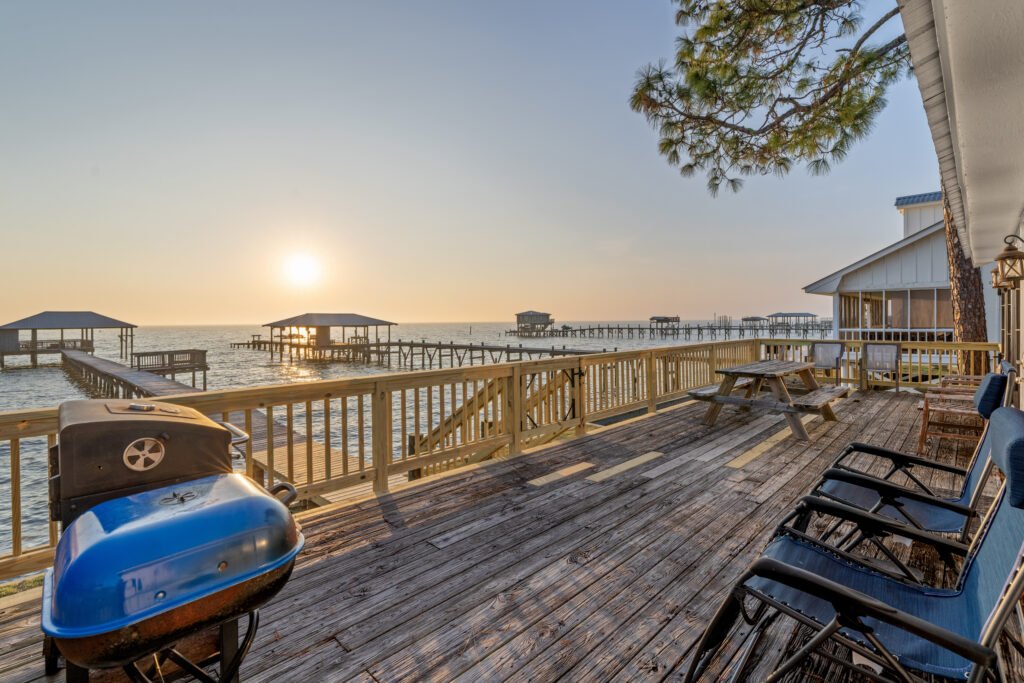
Nature here is not scenery. It is a participant. Mobile Bay hosts one of the rarest natural phenomena on earth — the Jubilee — when bottom-dwelling sea creatures swarm to shore during specific summer conditions. It occurs in only two places worldwide: Mobile Bay and Tokyo Bay. When the call goes out, families rush to the water with nets and coolers. The Fairhope Pier is the best free public spot to witness one. It belongs to the place itself.
Cottage living is slow living. Small spaces require less maintenance. Porches invite sitting. Natural materials ask to be touched, not rushed past. The cottage is the architectural embodiment of slowing down.
Cottages of Fairhope – The Future
Fairhope is growing. The population has increased roughly three percent annually, reaching an estimated 27,700 in 2026. Baldwin County welcomed 8.39 million visitors in 2024 — the most of any county in Alabama — and adds approximately 7,100 new residents each year, making it the seventh-fastest-growing county in the nation.
What is remarkable is that growth has not erased the cottage character; the community protects it. New developments in the heart of the Fruit and Nut District draw deliberate inspiration from Fairhope’s historic summer communities. The Colony, a recent development, includes cottage lots alongside townhomes, manor homes, and estate lots — all arranged around walkable streets with front porches and human-scaled setbacks. The city’s Visual Preference Survey confirmed what residents already knew: Fairhope’s character depends on compact, walkable, mixed-use development at a human scale.
The national numbers reinforce the local instinct. The U.S. short-term vacation rental market reached $68.64 billion in 2024 and is projected to grow at 7.4 percent annually through 2030. Within that market, cabins, cottages, and unique properties are growing fastest — at 8.1 percent — outpacing conventional rentals. Travelers increasingly seek what the industry calls “experiential stays”: places that reflect local culture, natural beauty, and a distinctive aesthetic. The cottage, with its handcrafted details, connection to landscape, and invitation to slow down, is exactly what the market is moving toward.
Fairhope’s cottage tradition is not nostalgia. It is not a preserved artifact or a marketing strategy. It is a living architectural philosophy — rooted in a 130-year-old community experiment, shaped by the Gulf Coast climate, and refined by generations of artists, builders, and residents who understood that a home does not need to be large to be meaningful.
The cottages of Fairhope are the proof.